Breast Revision In Ladera Ranch, CA
 Model
Model
Poor breast augmentation results can be devastating because of the time and money you have spent trying to achieve your ideal body. You may have chosen an underqualified surgeon, picked the wrong implant type for your body, or developed uncontrollable complications post-surgery. In the end, the results are the same—a bustline that doesn’t make you feel happy and confident. Breast revision surgery can remove or replace implants following an unsuccessful augmentation. Dr. Doezie works closely with all of his revision clients to develop a custom revision plan that will result in a beautiful breast appearance.
What Is Breast Revision?
Sometimes called secondary breast augmentation, breast revision involves replacing the old implants and improving the appearance of the augmented breasts. Breast revision is often performed to correct implant complications or undesirable results from a previous breast augmentation. The procedure can also be performed to simply swap out breast implants that have been in the body for 10 to 15 years and are in need of replacement.
What Are the Benefits of Breast Revision?
- Corrects postoperative complications for better results (i.e., capsular contracture, implant rupture, symmastia, etc.)
- Alters the breasts based on changing patient preferences by changing the shape, size, and/or position of the implants
- Eliminates pain from implant complications, allowing for comfort and peace of mind
- Creates a more natural and balanced breast appearance to complement the patient’s figure and align with their goals
What to Expect From Your Breast Revision
While it may be best to consult with your primary surgeon for revision surgery in some cases, this may not be possible for you. Dr. Doezie holds extensive consultations with his revision patients to gain a better understanding of why they are seeking revision surgery, especially for poor breast appearance. With a thorough understanding of your desires, Dr. Doezie will evaluate your body type and breast symmetry to devise a customized revision plan. Dr. Doezie will discuss the details of your unique revision plan during your consultation.
 Model
Model
What Are the Reasons for Breast Revision?
Bottoming Out
The breast implants tend to bottom out when they are not sufficiently supported by the surrounding tissues and skin. This can be due to choosing implants that are too large for your chest, having weak breast skin, having weak breast tissue, or incorrect implant placement.
Breast tissue along the inframammary line that has become weak can struggle to support your breast implants. Over time, your breast implants can descend below the inframammary line. This causes volume loss in the upper pole of your breasts, and a distinct implant edge may develop below the inframammary crease. With implants that have bottomed out, the nipples may appear too high on the breasts.
Correction Technique: Capsulorrhaphy, which places sutures in the lower portion of the breast. This technique elevates the breast implant to the correct position and provides additional support in the future.
Capsular Contracture
Some patients experience their bodies reacting poorly to the inserted implants. A natural step of the breast augmentation recovery process involves scar tissue forming around the implants, and this scar tissue keeps the breast implants in place. However, this can become an issue when the natural scar tissue surrounding your breast implant begins to harden excessively, which is known as capsular contracture.
During capsular contracture, the hardened scar tissue can squeeze the implants, causing pain and an unnatural breast appearance. Depending on the severity of your capsular contracture, your breasts may appear high and tight.
Correction Technique: Scar tissue release or removal. A capsulotomy uses an incision along the scar tissue to release pressure. In severe cases, a capsulectomy completely removes the surrounding scar tissue. A textured implant may be placed to prevent future capsular contracture.
Double Bubble Deformity
Causes of double bubble deformity include positioning the implants below the inframammary crease during surgery or when the implant naturally sags over time due to aging breast tissue.
Double bubble deformity occurs when weak breast tissue sags and begins to pool under the breast tissue. The settling of this excess tissue creates the appearance of a second bubble under the breast. The nipple-areola complex may shift position due to sagging tissue, creating the appearance of sagging breasts.
Correction Technique: A breast lift can be used to eliminate excess breast tissue and provide a firmer breast appearance. Internal sutures support weak tissue, and the nipple-areola complex may be repositioned.
Malposition of Anatomical Implants
The breast implants may shift in the chest due to physical trauma, poor implant placement during surgery, or as a result of other post-surgical complications (such as capsular contracture). When the implants shift, patients may feel pain in their breasts.
Anatomical, or “teardrop,” implants are used to create a natural appearance with fullness in the lower pole of the breasts. A poor breast appearance can be created when anatomical implants rotate within the breast pocket. Malposition of the implants can cause the breasts to appear too high on the chest, to appear too low and saggy, to have a large gap between the breasts, or the implants may merge and form a “uniboob.”
Correction Technique: Implant repositioning or replacement. Your anatomical implants may be repositioned in the breast pocket to restore their appearance, or they may be replaced with round implants to prevent future complications.
Positioning Issues
Positioning issues can vary between patients. Your breast implants may sit too close together, may have been placed too far apart, or may have settled unattractively in your breast pocket. A poorly positioned implant can negatively affect the overall appearance of your breasts, creating undesirable breast contours.
Correction Technique: Implant replacement or repositioning. Your implants may need to be completely replaced to achieve the positioning you require. You may choose to change the implant placement in the breast pocket from above the muscle to under the muscle. In other cases, the current implants may be repositioned in a more suitable position.
Ruptured Implants
Implants can rupture from physical trauma to the implant, a defect within the implant, or with age. When the implant ruptures, patients may experience discomfort in the chest, visible changes to their breast appearance, or additional implant complications. It is also possible for patients with ruptured implants to experience no symptoms.
Implant ruptures can occur in both saline and silicone implants. Saline implants will noticeably deflate when ruptured, whereas silicone implants require an MRI to properly diagnose a leak. Ruptured implants are not considered a medical emergency, but it is essential to get them treated as soon as possible to prevent other issues from occurring.
Correction Technique: Replacement, where the damaged implant is removed. The implant pocket is cleaned of saline or silicone, and a new implant is inserted.
Size Change
Sometimes, the implant size that patients choose for their breast augmentation ends up not looking the way they want. A number of factors in breast surgery can affect your resulting breast size. If your breasts don’t turn out the size you originally envisioned, you may be disappointed with the quality of your results. Depending on your body type and your personal preferences, your breasts may feel too large or too small.
Correction Technique: Implant size replacement, where a more appropriate implant size is inserted into your implant pocket. Dr. Doezie will help you choose an implant size that meets your aesthetic goals while maintaining a balanced and natural appearance.
Symmastia
When implants that are too large for a patient’s chest are inserted, symmastia may occur. Symmastia is an implant complication that happens when one or both of your implants shift laterally in the implant pockets toward the middle of your chest. In severe cases, the two breasts can become connected at the cleavage, forming a uniboob. The skin over the sternum may tent from one breast to the other. Your nipples may also begin to point outward.
When patients experience symmastia, they may feel pain, discomfort, and dissatisfaction with the appearance of their breasts. While symmastia typically does not cause any health issues, many women seek treatment to eliminate discomfort and make their breast appearance align with their aesthetic vision.
Correction Technique: The breast pocket is manipulated to better hold your implants, which are moved back into their proper position. The connection at the midline is also corrected for a more natural breast appearance.
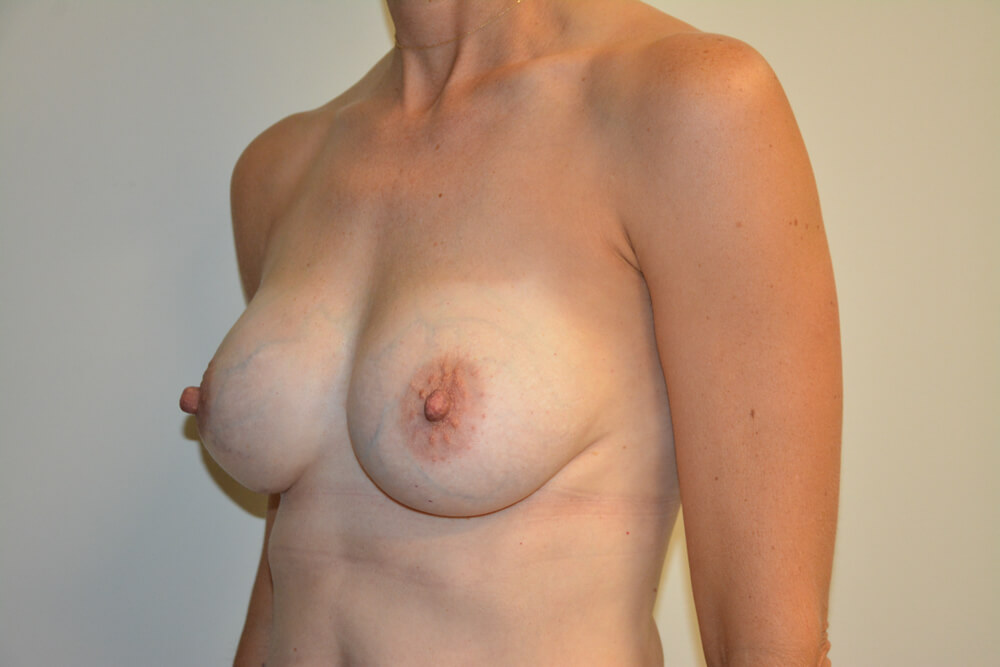
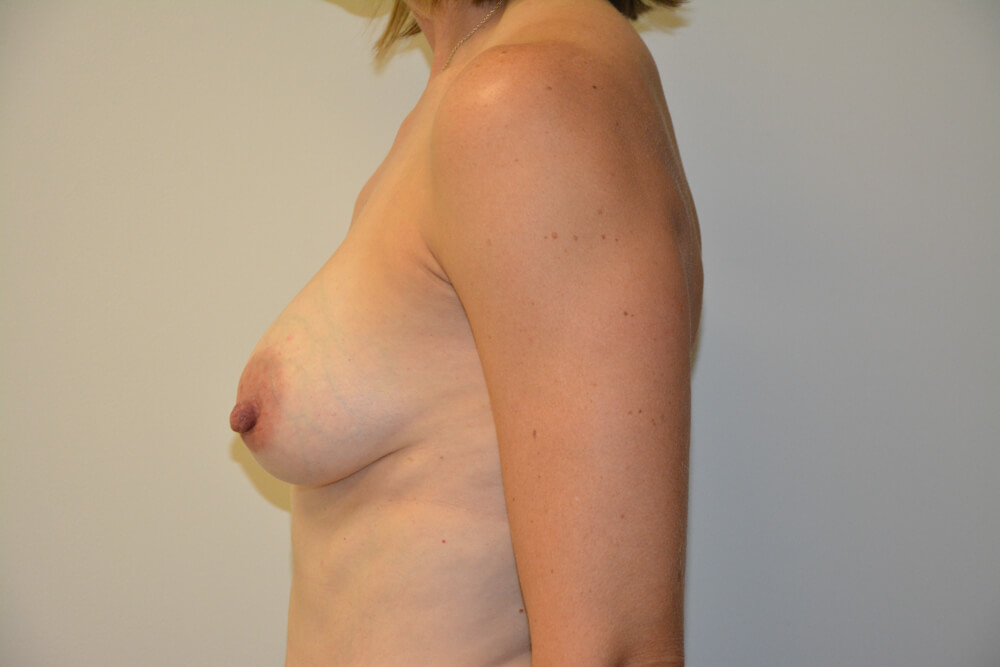
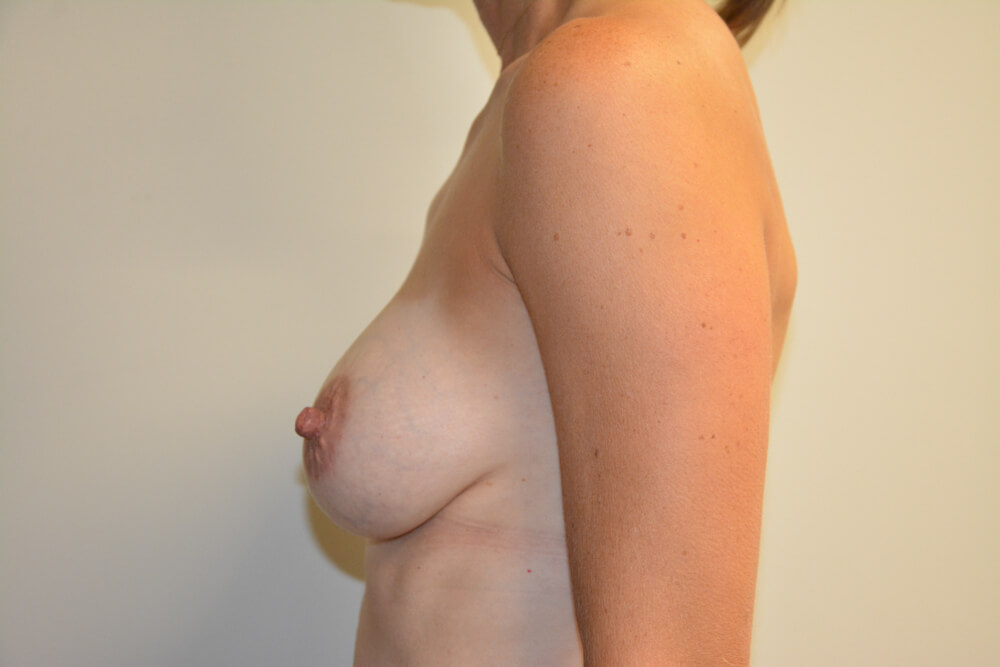
Breast Revision Before & After Photos
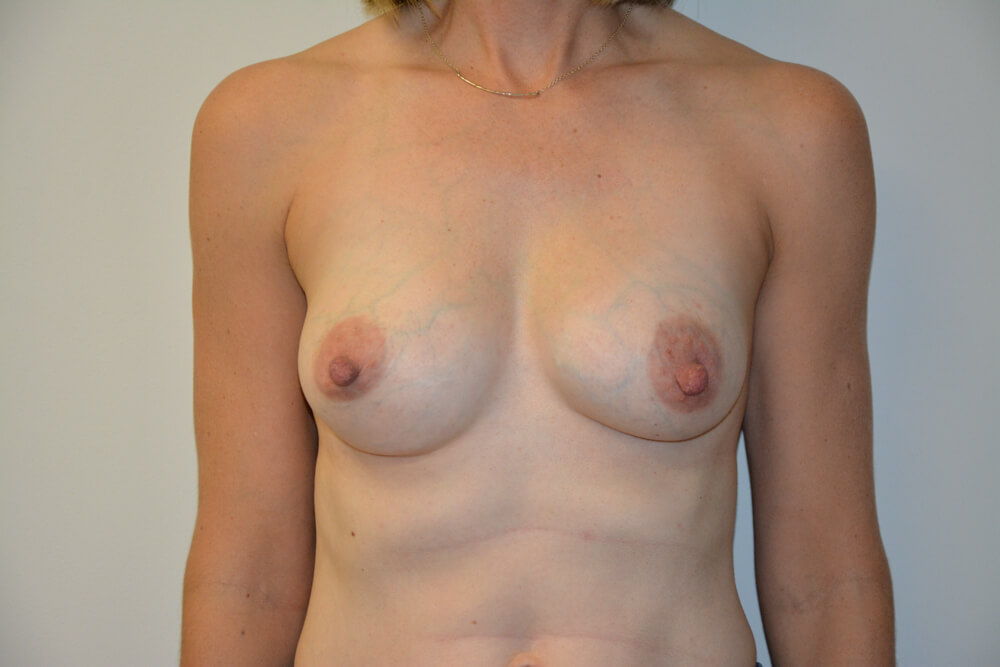 Before
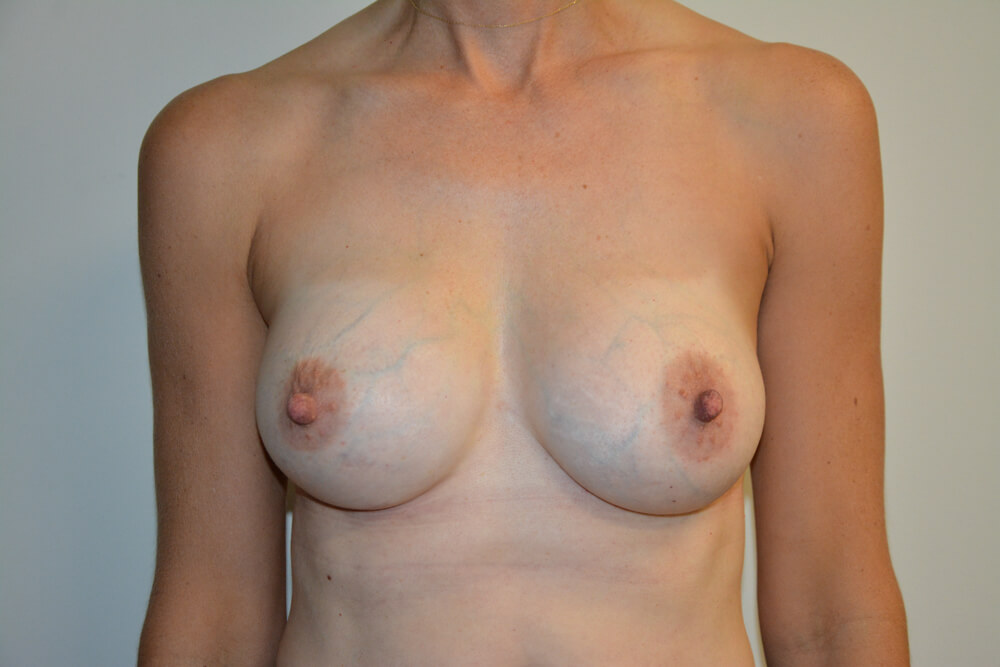 After
After
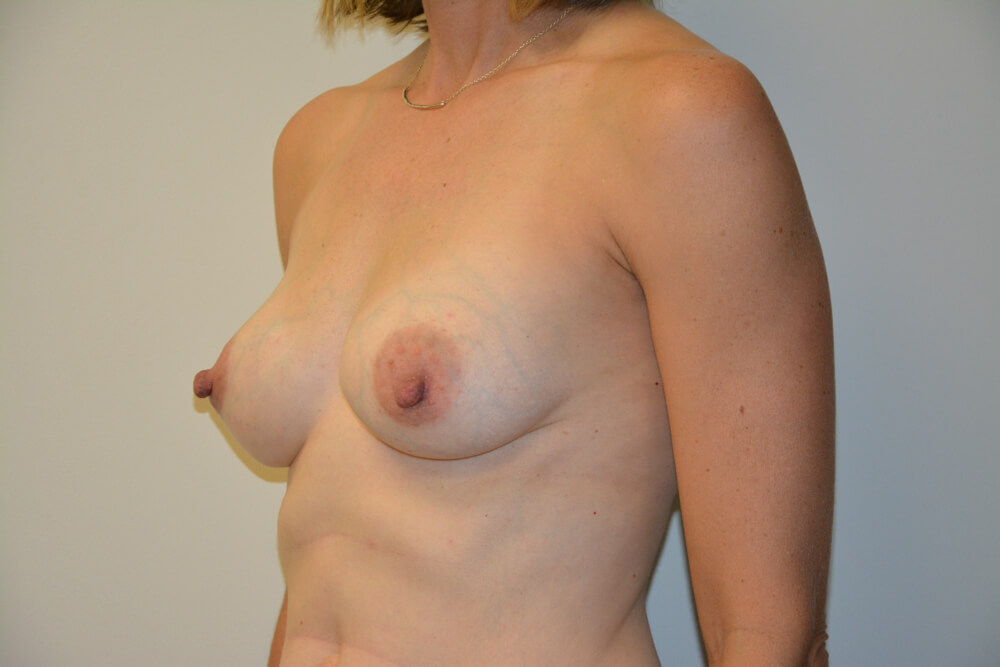 Before
 After
After
 Before
 After
After
Things to Consider Before Deciding
Breast revision surgery is often performed on the same scale as an augmentation, and your recovery period may last just as long. If you are experiencing any of the above issues, it may be time to schedule your consultation with Dr. Doezie. The goal of breast revision surgery is to balance your aesthetic desires with your natural build to ensure beautiful, natural-looking breasts.
 Model
Model
Frequently Asked Questions
When should I consider having breast revision surgery?
If you are dissatisfied with your breast appearance or are experiencing any pain or discomfort, breast revision may be right for you. Your breasts require six months to a year to fully heal from the primary augmentation, and you should allow your breasts to heal naturally before considering revision surgery.
How likely am I to need breast revision after my primary breast surgery?
Each woman is unique, and it can be impossible to tell which complications you may experience following your breast surgery. As many as 15 percent of women undergo revision surgery to correct a poor breast appearance or complications after breast augmentation.
Do I need to have my implants replaced during breast revision?
Implants do not always need to be replaced to correct an unsatisfactory breast appearance. If your implants are intact and aren’t the reason for needing breast revision, then you should be able to keep your original implants.
Will breast revision surgery prevent me from having complications in the future?
Breast revision surgery corrects current breast issues and can provide support to your breasts to minimize the risk of new issues developing. However, some issues, such as capsular contracture, can recur for unknown reasons. Routine follow-up appointments with Dr. Doezie will help ensure quality, long-term results.
What is the cost of breast revision surgery?
The cost of your breast revision will vary based on the type of correction you require. Depending on the reason for undergoing revision surgery, a portion may be covered by your implant manufacturer based on rupture or capsular contracture. Contact your implant manufacturer for additional information.
Do I have to replace my breast implants every 10 years?
On average, women tend to have their breast implants replaced 10 years after their original breast augmentation due to preference changes, breast changes, or complications. However, replacing your implants every 10 years is not medically necessary. If you are satisfied with the look and feel of your breasts, there may be no need to replace them.
Patient Testimonials
See what our patients have to say about their experiences and the exciting results they’ve achieved at Mission Plastic Surgery & Aesthetic Center.
Dr Doezie did my surgery in Spring this year.
I had consultations with other doctors who focused just on my looks rather than how the process would affect my entire life. Dr. Doezie provided realistic expectations and was also warm and reassuring. I felt very safe and well cared for. He listened to my concerns and wishes and did exactly what I wanted…
The office is beautiful, organized, and the staff is warm and respectful.
Dr. Doezie performed my breast reconstruction, including an emergency surgery. His surgical skill and attention to detail are outstanding, and I felt supported throughout a very difficult time. Highly recommend.
Everyone that works in this office is very professional.
The times that I have visited there have always been pleasant. The follow up and reminders about appointments is super helpful. I would highly recommend Mission Plastic surgery.
Very impressed with Dr Doezie.
He is very knowledgeable and made my experience very comfortable. We were able to have the same vision of what I wanted and answered all my questions. So glad I got the recommendation from my friend. I would pass on that recommendation to anyone.
 Model
Model
Out of Town Patients
Mission Plastic Surgery welcomes out-of-town patients. To make your experience seamless, we offer virtual consultations and follow-ups, bringing Dr. Doezie’s expertise to you, wherever you are. Our team is happy to provide personalized recommendations for lodging, restaurants, and local attractions to help you feel at home throughout your stay.
Book Virtual ConsultationMake Yourself At Home
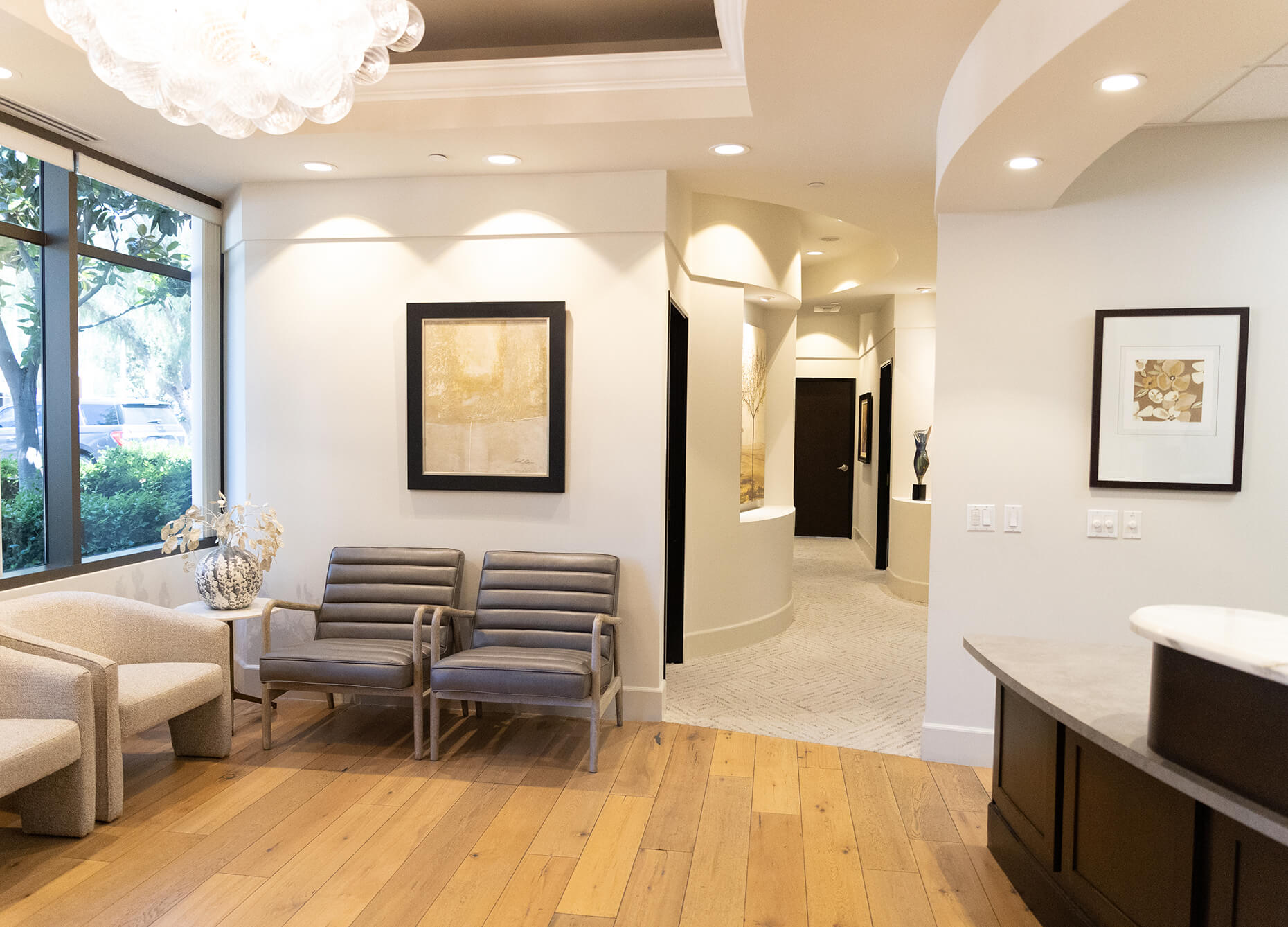
Step into our newly designed office. Made to feel like the living room of a home, it’s the perfect backdrop for your aesthetic journey—a calming retreat where you can experience elevated comfort and feel at ease, cared for from the moment you walk in.
Contact Us